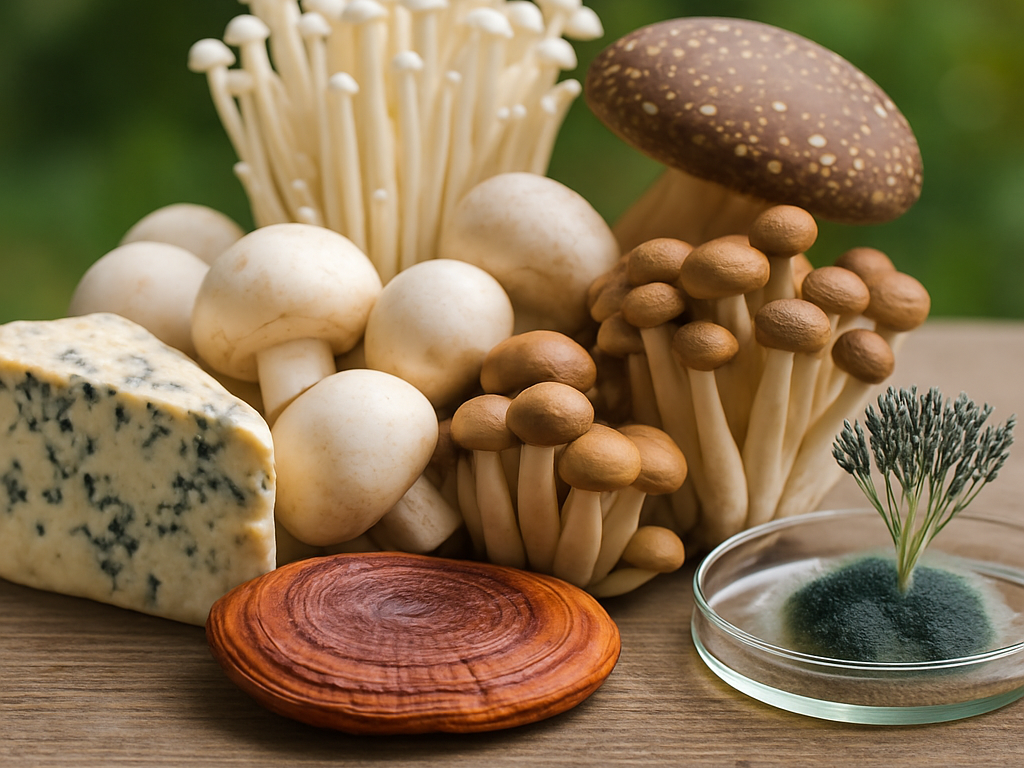
Fungi: Villains or Heroes? How They Impact Your Health

Introduction
Did you know some fungi can save lives, while others threaten your health?
Fungi are everywhere—from life-saving antibiotics to persistent infections. In this article, we explore how these curious organisms can act as both villains and heroes when it comes to your health.
What Are Fungi and Why Should You Care?
Fungi are a unique kingdom of organisms, separate from plants and animals. They play vital ecological roles, such as breaking down organic matter and supporting plant roots.
Chances are, you encounter fungi daily—whether it’s mold on bread, yeast in baking, or even blue cheese. But some encounters can be less welcome, like athlete’s foot or nail infections.
The Villains – Fungi That Harm Your Health
- Candida albicans: Causes yeast infections and thrush.
- Aspergillus fumigatus: Affects the lungs, especially in people with weakened immune systems.
- Trichophyton: Affects skin and nails, leading to conditions like ringworm and onychomycosis (toenail fungus).
Prevention Tips: Keep your environment dry, avoid sharing personal items like nail clippers, and inspect food for mold before eating.
The Heroes – Fungi That Heal and Protect
- Saccharomyces boulardii: A probiotic fungus used to promote gut health.
- Penicillium chrysogenum: The mold behind penicillin, one of the world’s first antibiotics.
- Medicinal mushrooms: Reishi and shiitake have been linked to immunity, anti-inflammation, and nutrition.
These fungi have transformed medicine and nutrition, showing that not all fungi are foes.
The Balance Between Good and Evil
Scientific studies on harmful fungi like Cryptococcus have led to important medical advances. Understanding fungi helps us fight disease and develop new treatments.
The takeaway: Knowledge is power. Not all fungi are enemies—many are allies in disguise.
Myths vs. Facts About Fungi
- Myth: “If you cut mold off food, the rest is safe.” – False. Mold spores can spread invisibly.
- Fact: “Fungal probiotics are safe for most people.” – True, but consult a doctor if you’re immunocompromised.
Real Stories and Trivia
Penicillin’s Discovery: Alexander Fleming accidentally discovered penicillin from mold in 1928, changing the course of medicine.
Pop Culture: The HBO series “The Last of Us” features a zombie fungus based on real-life Cordyceps, which scientists are researching for medical purposes.
Conclusion
Fungi are fascinating organisms that deserve more attention. Whether they’re healing us or challenging us, understanding fungi is essential for health and wellness.
How will you rethink fungi’s role in your life?